Complete guide to Arknights Endfield covering all gameplay systems, platforms, and features
Published: 02/06/2026
Updated: 02/12/2026
20 min read
Gaming

Arknights: Endfield – The Complete Guide to Hypergryph’s Factory-Driven Action RPG

CONTENTS

    Everything you need to know about the ambitious gacha game that blends real-time combat with industrial automation

    Arknights: Endfield represents one of the most ambitious departures from a successful formula in recent gacha gaming history. Hypergryph’s original Arknights became a global phenomenon through its tactical tower defense gameplay, but Endfield abandons that framework entirely in favor of real-time 3D action RPG combat, semi-open world exploration, and a factory automation system inspired by games like Factorio and Satisfactory. The result is a free-to-play experience that feels genuinely different from the Genshin Impact clones dominating the market.

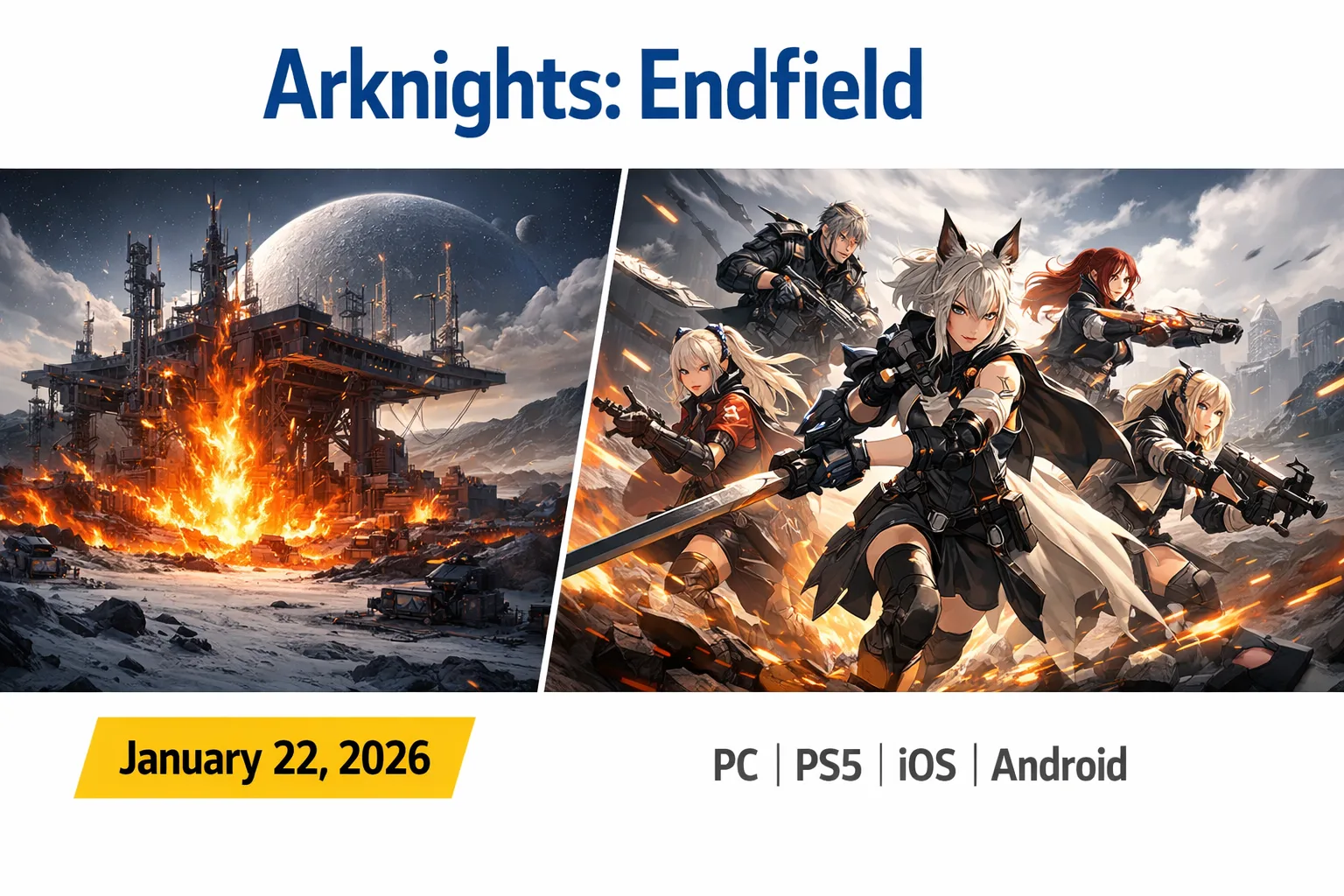
    Released globally on January 22, 2026, across PC, PlayStation 5, iOS, and Android, Endfield offers cross-save functionality and runs on a modified version of Unreal Engine 5. The game takes place on Talos-II, a dangerous moon where players lead Endfield Industries operators in expanding humanity’s frontiers while managing automated production facilities. This guide covers everything from story and gameplay systems to technical requirements and monetization, serving as your central resource for understanding what makes Endfield unique.

    The World of Talos-II: Setting and Story

    Arknights: Endfield shares a universe with the original Arknights but takes place in a completely different setting with new characters and storylines. The game unfolds on Talos-II, a moon that humanity has been attempting to colonize for over 150 years following catastrophic events on their original world. Through relentless effort, settlers established the Civilization Band—a relatively safe zone where cities and outposts can exist with some stability.

    Map showing Talos-II's Civilization Band safe zone and dangerous wildlands regions
    Talos-II features a safe Civilization Band surrounded by dangerous wildlands filled with resources and threats

    Beyond this protected area lie vast unexplored territories known as the wildlands. These regions contain valuable resources, lost technology from an ancient civilization called the Old Era, and dangerous supernatural phenomena. Two primary threats plague Talos-II: The Corruption, a catastrophic force that distorts reality and creates environmental anomalies, and hostile entities including the Aggeloi (inorganic constructs) and Landbreakers (raiders).

    Players assume the role of the Endministrator, leader of Endfield Industries—a high-tech contracting company specializing in planetary development projects. Awakening from stasis after ten years with partial amnesia, the Endministrator discovers they’re the only person capable of operating certain critical technologies, particularly the Automated Industry Complex (AIC) systems that power industrial expansion across Talos-II.

    The narrative structure differs from typical gacha games. Rather than progressing through a linear story told primarily via cutscenes, Endfield’s plot develops organically through exploration, environmental storytelling, and watching the world physically change based on your industrial activities. New settlements emerge, regions transform as your factory networks expand, and NPCs respond dynamically to your progress rather than remaining static quest dispensers.

    While the overarching plot can feel dense with proper nouns and technical jargon—a common trait in the Arknights universe—the moment-to-moment storytelling benefits from strong voice acting across multiple languages and high-quality character models that convey emotion effectively. The game doesn’t shy away from exploring the ecological and social consequences of industrial expansion, adding thematic weight beyond typical “save the world” narratives.

    Gameplay Overview: Action RPG Meets Factory Simulation

    Arknights: Endfield’s gameplay divides roughly evenly between action RPG elements and factory management, though players can adjust this balance according to preference. The core gameplay loop involves exploring regions to gather resources, establishing automated production facilities, completing story missions, and engaging in real-time combat encounters.

    Unlike the original Arknights’ grid-based tactical combat where you deploy operators and watch battles unfold, Endfield puts you directly in control of a four-member squad in real-time 3D action. However, the factory automation systems mean you’re not constantly grinding for materials—your production facilities continue generating resources even when you’re offline, encouraging players to build efficient systems rather than repetitively farming the same nodes.

    Exploration follows a semi-open world design. While not a seamless open world like Genshin Impact, regions are large interconnected zones with environmental puzzles, hidden collectibles, and obstacles requiring specific tools or progression milestones to overcome. The game encourages thoughtful backtracking as you unlock new abilities—a water-powered drone in the Wuling region lets you access previously unreachable areas, while explosives open blocked pathways.

    The Automated Industry Complex serves as Endfield’s most distinctive feature. You’ll place mining extractors at resource nodes, connect them via ziplines and conveyor belts to processing facilities, manage electrical grids to power everything, and route finished products to storage or trading outposts. The complexity scales from simple resource gathering to intricate production chains that transform raw ores into crafted weapons and equipment.

    This factory layer integrates meaningfully with other systems. Crafting better gear requires establishing production lines for component parts. Trading with settlements demands steady supplies of processed goods. Expanding into new regions necessitates building infrastructure to support operations there. The interconnection between combat progression, exploration, and industrial development creates a gameplay loop where each activity feeds into the others.

    Diagram showing the interconnected gameplay loop of exploration, factory building, combat, and trading
    Endfield’s gameplay loop integrates exploration, automation, combat, and trading into a cohesive experience

    Combat System: Real-Time Squad Action

    Combat in Arknights: Endfield operates through a real-time system where all four squad members fight simultaneously. You directly control one operator at a time but can instantly switch between them mid-combat. Each character has a basic attack string culminating in a finisher, plus unique skills that charge over time.

    The combo system forms the combat’s core strategic element. Characters build combo meters through attacks, and when conditions are met, they can trigger powerful combo skills. These often synergize with teammates—for example, the Endministrator’s combo skill activates automatically when another squad member uses theirs, creating opportunities for devastating chain attacks if you’ve built your team thoughtfully.

    Breakdown of Arknights Endfield's real-time combat system with squad control and combo mechanics
    Combat features four-operator squads with real-time character switching and synergistic combo skills

    Character roles follow familiar RPG archetypes: DPS dealers focus on damage output, tanks absorb hits and draw aggression, supports provide healing and buffs, while specialists offer utility like crowd control or environmental interaction. Team composition matters because skill synergies between operators can dramatically increase effectiveness compared to four individually strong characters with no coordination.

    Combat itself feels responsive and satisfying, with weighty hit feedback and flashy skill effects. The difficulty curve starts gently but ramps up in later regions and optional challenge content. Most story battles are manageable with moderate investment, but Protocol Spaces—special challenge dungeons—and Energy Alluvium sites require optimized builds and tactical execution.

    Enemy variety includes the Aggeloi constructs that emerge from The Corruption, human raiders called Landbreakers, and various corrupted creatures. Boss encounters feature attack patterns that require learning and dodging, though the game is more forgiving than hardcore action titles.

    For players wanting deeper combat mastery, the system allows weapon switching, dodge canceling into attacks, and precise timing of combo triggers for maximum damage windows. However, casual players can succeed through solid team building and gear progression without perfect execution.

    The Factory System: Automation and Production

    The Automated Industry Complex (AIC) represents Endfield’s boldest design choice—integrating factory automation gameplay typically found in dedicated simulation games into a gacha action RPG. This system lets you construct industrial facilities directly in the open world, creating production chains that operate continuously.

    At its simplest, you place a mining node at a resource location, which extracts materials automatically. Route those materials via conveyor belts or ziplines to processing machines that refine raw ores into usable components. Connect everything to a power grid (which you must budget and expand), and the system runs indefinitely, stockpiling resources even when you’re not playing.

    Visual guide showing how factory automation works from mining to storage in Arknights Endfield
    The AIC Factory system automates resource extraction, processing, and storage through connected production chains

    The complexity grows as you progress. Some materials require multi-stage processing—raw ore becomes refined metal, which combines with synthesized chemicals to produce alloy parts, which then feed into weapon crafting stations. Managing inputs, outputs, and throughput rates becomes genuinely engaging for players who enjoy optimization puzzles.

    The AIC Plan screen serves as your upgrade interface, with a tech tree spanning six categories: resourcing, logistics, processing, power, combat, and exploration. Unlocking nodes provides new machines, increased efficiency, or expanded capabilities. Three upgrade tiers (Basic I, II, and III) gate progression, requiring specific materials and Authority Level thresholds to access.

    Blueprint sharing adds a social dimension. Players can export their factory layouts and share them with others, allowing less technically-minded players to implement efficient designs created by the community. This feature hasn’t fully matured at launch, but the potential for collaborative optimization is significant.

    The factory system extends beyond simple crafting. You’ll trade processed goods with settlements for currency and reputation. Regional development missions require delivering specific materials in quantity, which incentivizes building dedicated production facilities. Some story gates require demonstrating industrial capacity, making the factory genuinely integrated into progression rather than a separate minigame.

    For players not interested in factory management, the game provides guided templates and simplified modes. However, those who engage deeply with the system find it remarkably satisfying—there’s genuine dopamine in logging back in to discover your facilities have generated enough materials to craft the equipment upgrade you needed, all while you were sleeping.

    Characters and the Gacha System

    Arknights: Endfield employs a gacha system called Chartered Headhunting for character acquisition. The system uses a standard rarity structure with 6-star operators being the highest tier, followed by 5-star, 4-star, and lower rarities. Pull rates follow industry standards: approximately 2% for 6-star characters, with a pity system guaranteeing a 6-star within a certain number of pulls.

    The gacha implementation includes both standard banners that persist and limited-time event banners featuring specific rate-up characters. A spark system lets players directly select a featured character after accumulating enough pulls on a banner, providing deterministic acquisition for those willing to invest heavily.

    At launch, Gryphline was generous with free premium currency and pulls through pre-registration rewards, launch celebrations, and mission completion. Players who cleared the “Break the Siege” main mission by February 5 received a free 6-star selector ticket, allowing them to choose between five powerful operators: Ardelia, Pogranichnik, Lifeng, Ember, or Last Rite.

    However, once these initial resources deplete, the gacha rates feel expensive relative to competitors like Genshin Impact or Honkai: Star Rail. Premium currency costs are comparable, but you receive fewer pulls per dollar spent. The game is completable as free-to-play—all story content is accessible without gacha characters, and the free operators you obtain through missions are viable—but building optimal teams or collecting favorites requires either patience or spending.

    Characters in Endfield feel distinct and well-designed. Voice acting quality is high across English, Japanese, Chinese, and Korean languages. Character models are detailed with expressive animations, and even NPC designs receive attention typically reserved for gacha roster members. The industrial sci-fi aesthetic creates a cohesive visual identity that differentiates Endfield from the fantasy or modern settings dominating the gacha market.

    Progression systems include operator leveling, skill upgrades, weapon enhancement, and gear crafting. Duplicate characters provide benefits but aren’t mandatory for viability—a welcome design choice that reduces pressure to chase copies.

    Platforms and System Requirements

    Arknights: Endfield launched simultaneously on PC (via Epic Games Store and other platforms), PlayStation 5, iOS, and Android. Cross-save functionality through Gryphline account linking allows seamless progression across any platform, letting players switch between PC gaming at home and mobile play during commutes.

    Comparison chart of Arknights Endfield features and requirements across PC, PS5, iOS, and Android
    Endfield supports PC, PS5, iOS, and Android with varying resolutions and features but unified cross-save

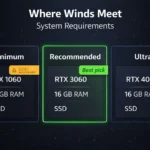
    PC system requirements are surprisingly reasonable for an Unreal Engine 5 title. Minimum specifications call for:

    • OS: Windows 10 64-bit or later
    • CPU: Intel Core i5-9400F or equivalent
    • RAM: 16GB
    • GPU: NVIDIA GTX 1060 6GB or AMD equivalent
    • Storage: 50GB SSD (plus 40GB for installation)

    Recommended specifications for higher settings and frame rates:

    • CPU: Intel Core i7-10700K or AMD Ryzen 7 3700X
    • RAM: 32GB
    • GPU: NVIDIA RTX 2060 Super or AMD equivalent

    The 32GB RAM recommendation seems excessive for the actual requirements—most mid-range systems with 16GB run the game smoothly at medium-high settings. The mandatory SSD requirement is justified by the semi-open world design, as loading between regions becomes noticeably sluggish on traditional hard drives.

    PlayStation 5 players benefit from native 4K resolution, stable frame rates, and ray tracing in select scenes. The PS5 version received particular optimization attention, with reviewers praising its consistent performance and controller implementation. There is no PS4 version, and Hypergryph hasn’t announced plans for Xbox platforms.

    Mobile requirements are demanding. iOS needs iPhone 11 or newer (A13 Bionic chip minimum), while Android requires Snapdragon 855, Dimensity 1000, or Kirin 990 processors with at least 6GB RAM. The mobile versions require approximately 25-28GB of storage depending on voice language packs. Performance on mid-range phones is acceptable at lower settings, but the full visual experience requires flagship devices.

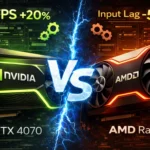
    The PC version supports DLSS 4 with Multi Frame Generation for NVIDIA RTX users, FSR for AMD cards, and TAAU as a platform-agnostic upscaling option. These technologies can dramatically improve frame rates on capable hardware without major visual compromises.

    Graphics, Performance, and Technical Quality

    Built on a modified version of Unreal Engine 5, Arknights: Endfield delivers impressive visual fidelity, particularly for a free-to-play title. The industrial sci-fi aesthetic creates a distinctive look—metallic structures, glowing Originium energy, stark wilderness punctuated by mechanical installations—that separates it visually from competitors.

    Character models showcase exceptional detail with realistic lighting, cloth physics, and facial animations during cutscenes. Environmental assets vary in quality—hero locations like major settlements look stunning with intricate architecture, while some background elements show lower-resolution textures. Occasional visual glitches persist at launch, such as objects clipping into cutscene cameras or obvious asset pop-in during traversal.

    The PC version offers extensive graphics customization with presets from Low to Ultra, plus granular control over individual settings. Key performance impacts come from shadow quality, volumetric effects, and anti-aliasing. Players on older hardware can achieve 60 FPS at 1080p by lowering shadows and disabling expensive effects while maintaining readable visuals.

    Frame rate caps support 30, 60, 120, and 144 FPS options. The game runs well at 60 FPS on recommended specifications, though pushing 120+ requires more powerful hardware and settings adjustments. V-Sync options and frame generation technologies help smooth out performance for various hardware configurations.

    The PS5 version targets and generally maintains 60 FPS at native 4K, with a quality mode that prioritizes visual fidelity and a performance mode that ensures frame rate stability. Loading times are brief on PS5’s SSD, typically under 10 seconds for region transitions.

    Mobile performance varies dramatically by device. Flagship phones from 2024-2025 handle medium-high settings at stable frame rates, but anything older or mid-range requires significant graphical compromises. Battery drain is substantial—expect 2-3 hours maximum on most devices when actively playing.

    Audio design deserves mention. The soundtrack blends orchestral themes with electronic elements that complement the industrial setting. Sound effects carry weight during combat, and environmental audio helps sell the atmosphere of different regions. The voice acting quality across all supported languages meets professional standards, with the English localization feeling natural rather than stilted.

    Monetization and Free-to-Play Experience

    As a free-to-play gacha game, Arknights: Endfield generates revenue primarily through character acquisition and optional conveniences. The premium currency, Oroberyl, is used for gacha pulls, stamina refreshes, and various shop purchases. Pricing follows industry standards with packages ranging from small amounts to $99.99 bundles.

    The launch period was notably generous. Pre-registration rewards, early-mission completions, and celebration events provided substantial free premium currency and gacha pulls. Players who engaged with all available content during the first weeks could perform 60-80+ pulls without spending, plus receive the guaranteed 6-star selector ticket.

    However, this generosity tapers significantly once these one-time rewards are exhausted. Daily and weekly tasks provide modest ongoing income, but acquiring specific rate-up characters without spending requires patience and saving. The pity system offers some security, but reaching spark threshold for direct selection demands considerable investment.

    The game’s stamina system, called Authority Points, gates certain activities like challenge dungeons and material farming nodes. Natural regeneration is relatively generous, and overflow storage prevents waste if you can’t play for extended periods. Stamina doesn’t limit exploration or factory activities, keeping the most unique gameplay elements accessible.

    Beyond gacha, the shop offers:

    • Protocol Pass: A battle pass equivalent with free and premium tracks providing materials and currency
    • Skin cosmetics: Visual variations for characters with no gameplay impact
    • Resource bundles: Materials and progression items available for premium currency
    • Subscription services: Monthly passes offering daily premium currency at improved value

    Critically, all story content and gameplay features are accessible without spending. The factory system, exploration, and combat mechanics aren’t paywalled. Free-to-play players can complete the entire narrative and most challenge content with the operators obtained through missions and free pulls, though building optimal teams or collecting favorites requires either money or extended play time.

    The monetization feels more aggressive than Genshin Impact’s—pulls are more expensive relative to income rates, and character acquisition rates are less favorable. However, it’s less predatory than many mobile gacha games, with no pay-to-win PvP elements or insurmountable difficulty walls designed to force spending.

    Content Structure and Progression

    Arknights: Endfield’s content divides into several categories that unlock as you progress through the Authority Level system—essentially your account level tied to exploration and mission completion.

    Roadmap showing content structure and progression paths in Arknights Endfield
    Content unlocks through Authority Level progression, offering main story, exploration, challenges, and factory activities

    Main Story Missions drive the narrative forward and unlock new regions. These feature high production values with full voice acting, cutscenes, and scripted encounters. Story missions gate access to major systems and areas, making them the primary progression path.

    Regional Exploration encompasses the open-world activities within each zone. Collectibles scattered throughout regions provide exploration points that grant account rewards. Environmental puzzles reward players who engage with the world’s mechanics. Hidden chests contain materials and premium currency. Increasing exploration percentage in each region unlocks regional rewards and sometimes story content.

    Protocol Spaces serve as challenge dungeons with puzzle elements and combat encounters. These instanced areas test your team’s capabilities and provide valuable rewards. Each Protocol Space has multiple difficulty tiers, encouraging revisiting with stronger teams.

    Energy Alluvium sites are repeatable combat challenges with escalating difficulty. These provide materials for character progression and gear enhancement. Stamina gates how frequently you can farm these locations.

    Tower Defense Mini-Games appear occasionally as mission variants, nodding to the original Arknights’ gameplay. These aren’t the core experience but offer variety and nostalgia for franchise fans.

    Factory Development constitutes its own progression path. Expanding your AIC capabilities, researching new machines, and optimizing production chains provides a parallel advancement system independent of combat power.

    Outpost Trading lets you exchange produced goods with settlements for currency, materials, and reputation. Building trade relationships unlocks new options and requests, creating economic gameplay loops.

    The progression curve starts gently, introducing systems gradually through tutorials. The early hours can feel overwhelming as the game explains factory basics, combat mechanics, exploration tools, and various currencies. However, once these foundations are established, progression opens up significantly, allowing players to focus on preferred activities.

    Authority Level requirements for story missions encourage engagement with side content rather than rushing through narrative. Some players appreciate this pacing, while others find it artificially gating. The balance feels intentional—Hypergryph clearly wants players to experience the full breadth of Endfield’s systems rather than treating it as a visual novel with combat interruptions.

    Community Reception and Post-Launch Support

    Initial community reception has been cautiously positive with notable reservations. Critics and players praise the factory system’s uniqueness, visual presentation, and ambitious scope. The game genuinely feels different from the glut of Genshin-inspired titles, which resonates with audiences suffering gacha fatigue.

    However, several criticisms have emerged consistently. The slow narrative pacing and dense technical jargon alienate some players during the critical first hours. The combat system, while satisfying, lacks the depth of dedicated action games—it can feel simplistic compared to Wuthering Waves’ more technical combat or Genshin Impact’s elemental reaction system. The gacha rates and pull costs feel expensive relative to earning rates once launch bonuses expire.

    Performance issues affect some players, particularly on mobile and lower-end PCs. Stuttering during intensive combat sequences, unexpected frame drops, and occasional crashes have been reported. Hypergryph has acknowledged these issues and released day-one patches, with further optimization promised.

    The factory system divides players starkly. Those who enjoy automation games find it engaging and refreshing. Players who primarily want action RPG gameplay can feel it’s an unwelcome distraction that interrupts the combat and exploration they actually care about. The game’s attempt to balance these audiences means it doesn’t fully satisfy either extreme, though players willing to engage with both aspects find a rewarding experience.

    Gryphline has committed to regular content updates. Version 1.1 is confirmed to introduce new characters, additional story chapters, expanded factory blueprints, and balance adjustments based on community feedback. Seasonal events, collaborative multiplayer features, and ongoing system refinements are planned. The developer’s track record with the original Arknights suggests reliable long-term support, though the question remains whether Endfield can maintain player engagement better than other gacha titles that start strong but lose momentum.

    The cross-platform implementation and cross-save functionality work smoothly, earning praise from players who appreciate the flexibility. The community has begun sharing factory blueprints and optimization strategies, suggesting the social elements around industrial efficiency may develop into a meaningful aspect of the game’s culture.

    Conclusion: A Unique Entry in the Gacha Landscape

    Arknights: Endfield stands as one of 2026’s most interesting gacha releases—genuinely attempting something different rather than iterating safely on proven formulas. The integration of factory automation gameplay into an action RPG creates a distinctive identity that either resonates strongly or feels like an unwelcome diversion depending on player preferences.

    The game’s strengths are clear: stunning visuals powered by Unreal Engine 5, a unique industrial sci-fi aesthetic, satisfying real-time combat with good team synergy mechanics, and a factory system that’s genuinely engaging for players who enjoy optimization puzzles. The cross-platform implementation is exemplary, and the production values rival paid titles.

    Weaknesses are equally apparent: a slow narrative start dense with jargon, gacha rates that feel expensive once launch generosity fades, combat that’s fun but lacks the depth to carry the game alone, and performance issues on some platforms. The game tries to serve two different audiences—action RPG fans and automation enthusiasts—which means it doesn’t fully excel at either individual component the way more focused titles do.

    For players burned out on Genshin Impact clones seeking something genuinely different, Arknights: Endfield delivers. The factory system provides a refreshing gameplay loop that extends beyond typical gacha daily routines. The willingness to experiment with genre blending should be applauded even if the execution isn’t flawless.

    For players expecting a straightforward action RPG that respects their time, Endfield might frustrate with its factory management requirements and slower pacing. The gacha system remains a barrier to full roster access, and the time investment to properly engage with all systems is substantial.

    Ultimately, Arknights: Endfield succeeds as a premium free-to-play experience that offers significant content without mandatory spending. Whether it maintains long-term engagement depends on Gryphline’s post-launch support and whether the unique factory gameplay remains compelling after the initial novelty fades. As a statement that gacha games can innovate beyond established templates, Endfield makes its case convincingly.

    The game is available now on PC, PlayStation 5, iOS, and Android with full cross-save support.