
Look, I’m gonna cut straight to it—the Ryzen 7 7800X3D is still the gaming CPU everyone should be buying in 2026, and it’s not even close. Yeah, there’s newer stuff out there. Yeah, AMD released the 9800X3D. But here’s the real talk: this chip delivers 95% of the performance at nearly half the price, and that math just makes sense.
What makes it special
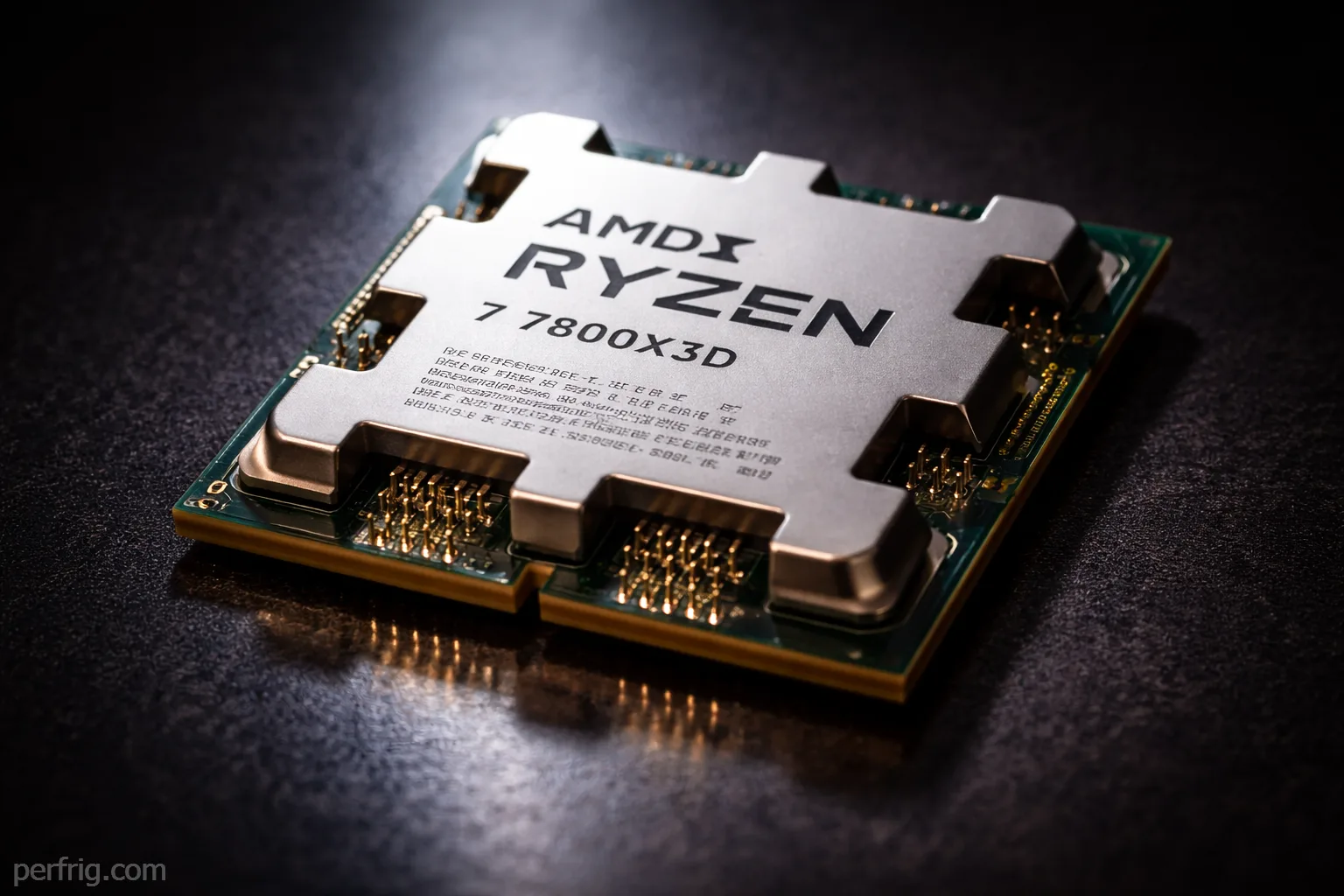
The secret sauce here is AMD’s 3D V-Cache technology. Basically, they stacked an extra 64MB of L3 cache right on top of the CPU die, bringing total L3 cache to a massive 96MB. For context, most CPUs have around 32MB. This extra cache acts like ultra-fast memory sitting right on the chip, so the CPU doesn’t have to wait around fetching data from your RAM.

Specs at a glance:
- 8 cores, 16 threads
- Base clock: 4.2 GHz
- Boost clock: 5.0 GHz
- L3 cache: 96MB (thanks to 3D V-Cache)
- TDP: 120W
- Socket: AM5
- Price: $370-$450 (varies by retailer)
The clock speeds aren’t groundbreaking—the regular Ryzen 7 7700X actually boosts higher at 5.4 GHz. But in gaming, that massive cache makes all the differance. Games love fast access to data, and having 96MB of L3 sitting right there means fewer memory bottlenecks and higher frame rates.
Gaming performance: where it actually matters
Here’s where the 7800X3D genuinly shines. In CPU-bound scenarios—think 1080p gaming with a high-end GPU like the RTX 4090—this thing dominates. We’re talking 10-15% faster than Intel’s Core i9-13900K in most titles, and that’s before you factor in the price difference.
The advantage is biggest in cache-sensitive games: open-world titles, simulation games, strategy games, competitive shooters. Games like Microsoft Flight Simulator, Total War, Counter-Strike 2, and Cyberpunk 2077 see massive gains. The extra cache reduces stuttering and improves those critical 1% low frame rates—the moments where you’d otherwise get sudden frame drops.
At 1440p, the gap narrows a bit but the 7800X3D still leads. At 4K, your GPU becomes the bottleneck anyway, so CPU differences mostly disappear. But if you’re gaming at 1080p or 1440p with a powerful GPU, this CPU will keep feeding it frames without breaking a sweat.

Real-world example: In competitive titles where every frame counts, the 7800X3D routinely pushes 300+ FPS in games like Valorant and CS2. That’s not just marketing—that’s the cache doing its job.
The competition: why this still wins
Let’s address the elephant in the room. AMD released the Ryzen 9 9800X3D, which is technically faster—about 8-10% in gaming benchmarks. Problem is, it costs around 50% more. You’re paying $150+ extra for that 10% uplift. Unless you’re chasing every last frame for professional esports, that’s just not good value.
Intel’s offerings? The Core i9-14900K competes in some games but runs significantly hotter (we’re talking 90-100°C under load vs the 7800X3D’s 65-85°C), draws way more power, and costs more. The i7-14700K is cheaper but still trails in gaming performance.
Bottom line: the 7800X3D offers the best price-to-performance ratio for gaming in 2026. Period.

Platform and compatibility
The 7800X3D uses AMD’s AM5 socket, which is a big deal for future-proofing. AMD committed to supporting AM5 through at least 2027, meaning you can drop in newer Ryzen 9000 or future chips without changing your motherboard. Compare that to Intel’s LGA1700, which is basically dead-end now.
What you’ll need:
- Motherboard: Any AM5 board works (B650, X670, X870)
- RAM: DDR5 is required—DDR5-6000 CL30 is the sweet spot
- Cooler: Not included. A decent tower cooler or 240mm AIO will handle it fine
- GPU: Pair with RTX 4070 or better to actually use its power
One note: there’s no DDR4 support on AM5, so if you’re coming from an older system, factor in DDR5 costs. That said, DDR5-6000 kits have dropped to around $100-130 for 32GB, so it’s not the budget killer it used to be.
Thermals and power efficiency
This is where the 7800X3D really embarrasses Intel. Under gaming loads, temps typically sit around 65-75°C with a decent cooler. Even under full all-core stress tests, it rarely exceeds 85°C. Compare that to the 13900K hitting 95-100°C and you see why this chip is so much easier to live with.
Power draw is equally impressive. Gaming power consumption hovers around 80-90W, occasionally spiking to 110W in heavy scenes. That’s crazy efficient for this level of performance. Your electricity bill will thank you, and you won’t need some massive 360mm AIO or dual-tower air cooler to keep it cool.
The downsides (yes, there are some)
Look, no CPU is perfect. The 7800X3D has some weaknesses:
Productivity performance is just okay. If you’re doing heavy video rendering, 3D modeling, or compiling code, CPUs with more cores (like the Ryzen 9 7950X or Intel’s i9 chips) will beat it. The 8-core count is fine for gaming and light productivity, but it’s not a workstation chip.
Overclocking is limited. The 3D V-Cache runs hot, so AMD locked down voltage and frequency adjustments. You can enable PBO (Precision Boost Overdrive) for small gains, but we’re talking maybe 2-3% improvement. Most people should just run it stock.
DDR5-6000 is the ceiling. Going beyond DDR5-6000 memory speeds yields minimal gains—maybe 1-2% in benchmarks. Save your money and stick with 6000 CL30 kits.
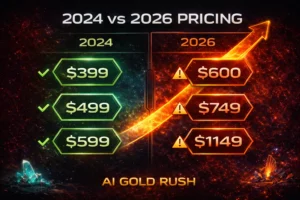
Price fluctuations are annoying. Depending on when and where you buy, prices range from $370 to $480. Amazon usually sits around $400, but Newegg sometimes spikes to $650 for no apparent reason. Shop around.
Who should buy this
Buy the 7800X3D if:
- Gaming is your primary use case
- You want high frame rates at 1080p or 1440p
- You value efficiency and low temps
- You’re building on AM5 for future upgrades
- You want great performance without spending $600+ on a CPU
Skip it if:
- You do heavy productivity work (rendering, compiling, etc.)
- You already own a 5800X3D and game at 4K (GPU limited anyway)
- You can snag a 9800X3D at similar pricing (rare but happens)
Current pricing and availability
As of January 2026, the 7800X3D typically sells between $370-$450 depending on the retailer. Best deals are usually on Amazon or Micro Center. I’ve seen it drop to $338 during major sales events (Prime Day, Black Friday), so if you can wait for those windows, do it.
Stock has been decent lately—unlike the 9800X3D which sold out everywhere and scalpers jacked prices to $700+. The 7800X3D is readily available, which is another point in its favor.
Final verdict
The Ryzen 7 7800X3D remains the gaming CPU to beat in 2026. It’s not the absolute fastest—that crown goes to the 9800X3D—but it offers 95% of the performance at significantly less cost. Throw in excellent power efficiency, managable thermals, and a future-proof platform, and you’ve got a chip that just makes sense for most gamers.
Is it perfect? No. Productivity performance is average, overclocking is locked down, and pricing can be inconsistent. But if your PC is primarily for gaming, none of that matters. This CPU will push high frame rates in every game you throw at it while running cool and quiet.
Rating: 9/10 – The best gaming CPU value in 2026

Pros:
- Exceptional gaming performance
- Excellent power efficiency and thermals
- Future-proof AM5 platform
- Significantly cheaper than alternatives
- Runs cool with basic cooling
Cons:
- Average productivity performance
- Limited overclocking headroom
- Requires DDR5 (adds to platform cost)
- Price varies wildly between retailers