The DDR4 versus DDR5 debate has honestly gotten more complicated than it should be. Not because the technology is confusing but because the market situation in late 2025 turned everything upside down. Let’s break down what actually matters for gaming and whether upgrading makes sense for your setup.
The speed difference explained
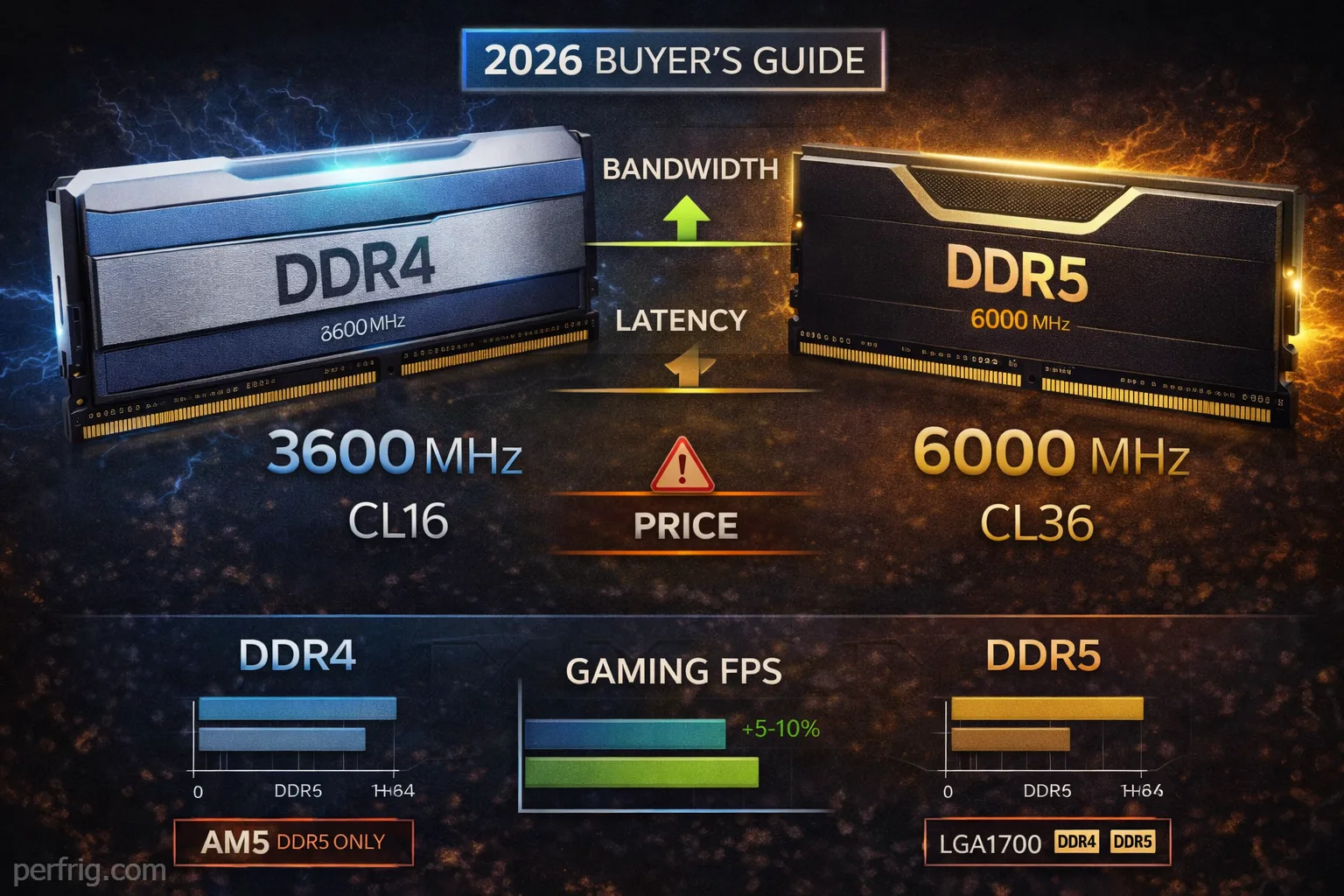
DDR5 starts at 4800 MT/s and goes up to 6400 MT/s or higher while DDR4 typically runs between 2133 MT/s and 3600 MT/s. On paper that looks like a massive advantage for DDR5 and in terms of raw bandwidth it absolutely is. A DDR5-6000 kit delivers roughly 96 GB/s of bandwidth compared to about 57 GB/s for DDR4-3600.
But here’s the thing bandwidth alone doesn’t tell the whole story for gaming. DDR5 runs higher latency than DDR4 because of how the technology works—typically CL36-40 on DDR5 versus CL16-18 on good DDR4 kits. That latency difference matters for certain types of gaming workloads especially competitive titles where every microsecond of response time counts.
The architectural improvements in DDR5 include dual 32-bit channels per module instead of DDR4’s single 64-bit channel. This allows better efficiency and power managment through the on-die PMIC (Power Management IC) which reduces voltage from 1.2V to 1.1V. These changes improve overall system stability and reduce power consumption which is genuinely helpful for laptops and power efficiency.

Real gaming performance differences
Testing across modern games shows the actual FPS differences vary wildly depending on the title and your system configuration. In recent CPU-intensive games like Spider-Man Remastered or Marvel Rivals DDR5 can deliver 20-30% higher framerates compared to DDR4. That’s a substantial jump that actually matters.
However in most mainstream AAA titles the difference shrinks considerably. Testing with games like Cyberpunk 2077 Assassin’s Creed or Far Cry shows DDR5 ahead by maybe 5-10% in typical scenarios. At 1440p or 4K where you’re usually GPU-limited the difference often drops to 2-5% which honestly isn’t worth obsessing over.
Competitive esports titles like Counter-Strike 2 or Rainbow Six Siege show minimal differences between fast DDR4 and DDR5. You might see 5-7% higher average FPS with DDR5 but the 1% lows and overall responsiveness feel nearly identical. The lower latency of DDR4 sometimes actually helps in these fast-paced scenarios where reaction time matters more than raw bandwidth.
Modern games built on Unreal Engine 5 and other new engines do seem to benefit more from DDR5’s bandwidth. Titles like Alan Wake 2 and The Last of Us Part 1 show 15-20% improvements with DDR5 especially at 1080p where the CPU and memory have more impact. As games continue evolving to use more complex streaming and asset loading systems DDR5’s advantages will probably grow.
The performance gap also depends heavily on your CPU. Intel’s 12th and 13th gen processors showed bigger differences between DDR4 and DDR5 than AMD’s Ryzen 5000 series did. Newer CPUs like Intel’s 14th gen and AMD’s Ryzen 7000/9000 series handle DDR5 more efficiently with better memory controllers and lower latency which improves the real-world benefits.

Platform compatibility issues
This is where things get messy honestly. AMD’s Ryzen 7000 and 9000 series on the AM5 platform only support DDR5—there’s no DDR4 option. If you’re building with one of these CPUs the choice is already made for you. Intel’s 12th 13th and 14th gen processors support both DDR4 and DDR5 but you have to pick one when choosing your motherboard since individual boards support only one type.
What this means practically is that upgrading from DDR4 to DDR5 usually requires replacing your motherboard and potentially your CPU as well. You can’t just swap RAM and call it done. The total cost of moving to DDR5 includes the new motherboard (easily $150-300 depending on features) and potentially a new CPU if your current one doesn’t support DDR5.
The physical notch position on DDR5 modules differs from DDR4 so you literally cannot insert DDR5 into a DDR4 slot or vice versa. This prevents accidental compatibility issues but it also means your investment in DDR4 becomes stranded when you eventually upgrade platforms.
The price situation in late 2025
Here’s where the conversation gets really interesting. Throughout 2024 and early 2025 DDR4 was significantly cheaper than DDR5 which made it the obvious choice for budget builds. A typical 32GB DDR4-3600 kit cost around $70-80 while comparable DDR5-6000 kits ran $120-140.
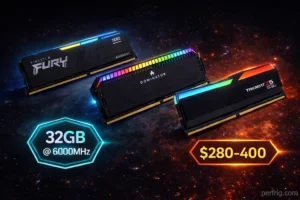
Then the bottom fell out in mid-2025. AI datacenter demand exploded and memory manufacturers shifted production capacity toward high-bandwidth HBM and server DDR5. This created massive shortages in consumer DDR4 and DDR5 causing prices to spike dramatically. By December 2025 that same DDR4 kit jumped to $200-240 while DDR5 increased to $380-410.
The crazy part is DDR4 prices increased faster percentage-wise than DDR5 because manufacturers are phasing out DDR4 production entirely. Samsung and Micron stopped making DDR4 in 2025 and SK Hynix reduced DDR4 to just 20% of production. This artificial scarcity drove DDR4 prices up to nearly match DDR5 despite being older technology.
What used to be a clear price advantage for DDR4 disappeared by late 2025. In some cases DDR5 actually became cheaper per gigabyte than high-performance DDR4 kits which is honestly wild when you think about it. The price premium for newer faster memory evaporated almost overnight.
Industry analysts expect the shortage and high prices to continue through most of 2026 with some relief possibly coming in late 2026 or 2027. If you’re shopping for RAM right now you’re buying at historically high prices regardless of which generation you choose.

Future-proofing considerations
DDR5 is definitely the future there’s no question about that. New platforms launching in 2026 and beyond will exclusively support DDR5 as DDR4 gets phased out completely. If you’re building a new system that you want to keep for 4-5 years DDR5 makes more sense despite the current high prices.
The capacity advantages of DDR5 also matter for longevity. DDR5 modules support up to 128GB per stick compared to DDR4’s maximum of 32GB. While most gamers don’t need more than 32GB total right now having that expansion headroom could be useful years down the line as games and applications demand more memory.
DDR5’s power efficiency improvements mean cooler operation and potentially better stability especially in compact builds or laptops where thermal management matters. The 1.1V operating voltage versus 1.2V for DDR4 might not seem like much but it adds up in systems running memory-intensive workloads for extended periods.
On the flip side if you already own a DDR4 system that’s working fine there’s limited reason to upgrade just for RAM. The performance gains in most games don’t justify replacing your motherboard CPU and RAM all at once. Put that money toward a better GPU or other components that will give bigger improvements.
Who should choose DDR4
Budget builders working with Intel 12th or 13th gen processors can still use DDR4 to save money on the overall system cost. Even with inflated prices DDR4 motherboards tend to cost less than DDR5 boards which helps offset some of the RAM price increases. If you find a good deal on DDR4 componenets it’s still a viable path.
People upgrading existing DDR4 systems obviously stick with DDR4 since platform changes aren’t worth it just for memory. If you’re running an older Ryzen 5000 or Intel 10th/11th gen CPU adding more DDR4 capacity makes perfect sense without needing motherboard replacement.
Gamers playing at 1440p or 4K where the GPU is the primary bottleneck won’t see huge benefits from DDR5 anyway. The performance difference between good DDR4 and DDR5 shrinks considerably at higher resolutions so spending extra on DDR5 delivers diminishing returns.
Who should choose DDR5
Anyone building a new system with AMD Ryzen 7000/9000 series has no choice—these platforms require DDR5. The good news is DDR5 prices have stabilized relative to DDR4 so you’re not paying as much of a premium as you would have a year ago.
Competitive gamers chasing high refresh rates at 1080p will benefit from DDR5’s bandwidth especially in CPU-limited scenarios. If you’re trying to push 240+ FPS in esports titles every bit of performance helps and DDR5 delivers measurable improvements in modern engines.
Content creators and streamers running demanding applications alongside games appreciate DDR5’s higher bandwidth for multitasking. Video rendering encoding and streaming benefit from faster memory access which can reduce export times and improve encoding performance.
Future-focused builders who plan to keep their system for 5+ years should absolutely go DDR5. The platform will receive longer support better optimization and compatibility with upcoming games and applications. Investing in DDR5 now means you’re not immediately dealing with end-of-life technology.
The realistic recommendation
If you’re building new in 2026 go with DDR5 unless you have a specific reason to choose DDR4. The price difference has narrowed dramatically and you’re buying into a platform with actual longevity. Aim for DDR5-6000 with CL36 or better timings which offers the best balance of performance and value.
If you already own a DDR4 system don’t rush to upgrade. Wait until you’re ready to replace your CPU and motherboard anyway then make the jump to DDR5 as part of a complete platform refresh. The gaming performance difference isn’t dramatic enough to justify spending hundreds on a partial upgrade.
For tight budgets where every dollar counts DDR4 can still make sense with Intel 12th/13th gen platforms. Just understand you’re buying into end-of-life technology that won’t have upgrade paths beyond your current generation. That’s fine if you’re planning a budget build now and a complete replacement in 3-4 years.
The memory market chaos of 2025 turned the DDR4 vs DDR5 decision into something other than a simple performance comparison. Prices availability and platform constraints all factor into what makes sense for your specific situation. Focus on your actual needs and budget rather than chasing marginal FPS gains that won’t matter in real gameplay.