
GPU prices are out of control in 2026: here’s who’s actually responsible
CONTENTS
Real talk: the GPU market is broken, prices have doubled, and nobody’s fixing it
Look, if you bought a graphics card in 2024, congratulations—you dodged a bullet. GPU prices in 2026 are genuinly absurd. We’re talking RTX 5070 performance at RTX 5080 money, RTX 5060 Ti cards selling for what RTX 5070s should cost, and AMD’s “budget-friendly” options creeping past $700. The worst part? This isn’t a temporary shortage or crypto mining boom. The entire industry fundamentally changed, AI ate gaming’s lunch, and you’re left holding the bill.
The numbers don’t lie: how bad is it really?
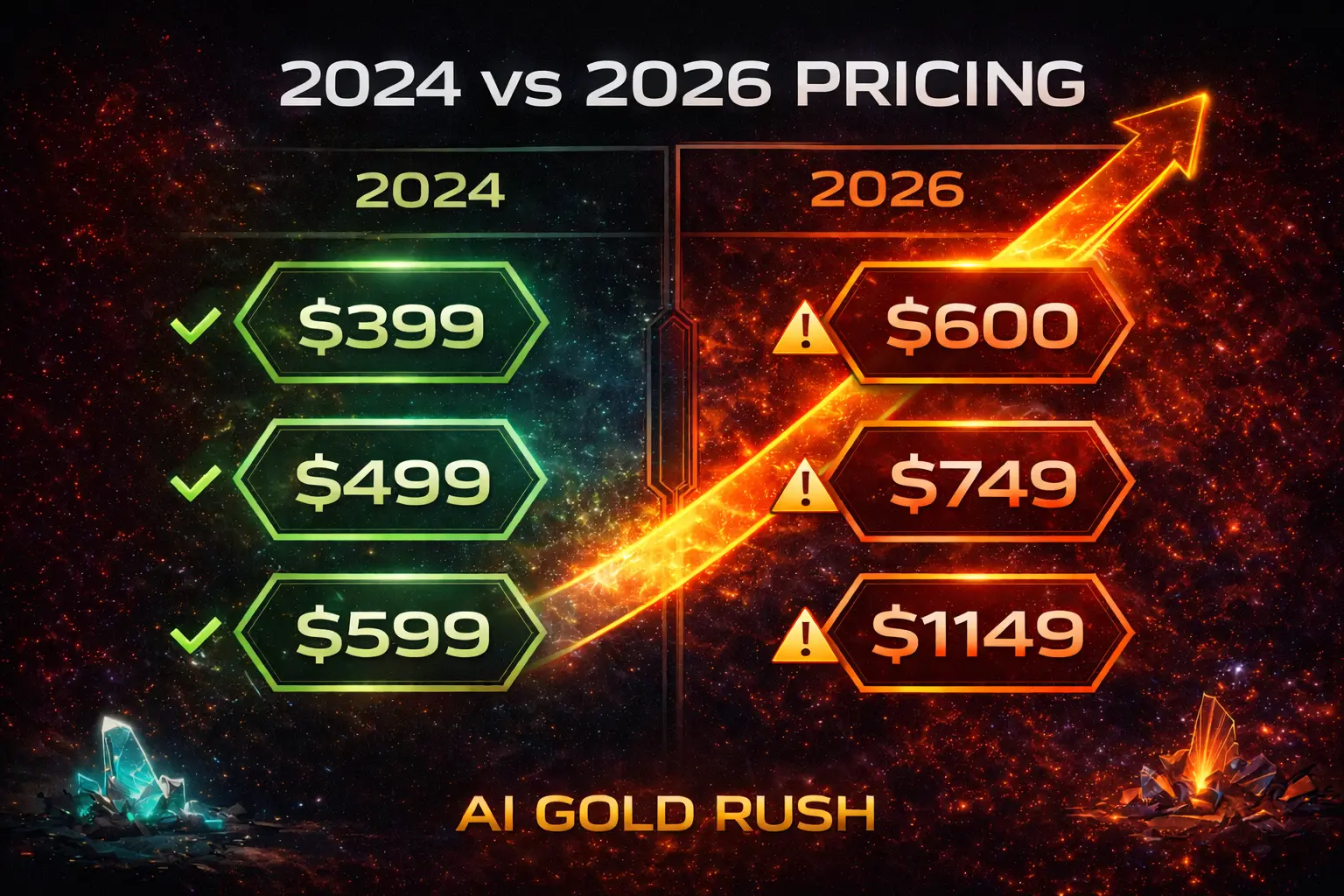
NVIDIA’s RTX 5060 Ti 16GB launched at $399 MSRP. Current street prices? Around $600, sometimes higher. That’s RTX 5070 money for 5060 Ti performance.
The RTX 5070 Ti is worse. MSRP says $749. Real-world retail runs $1,149 and climbing. You’re paying RTX 5080 money for RTX 5070 Ti performance.
AMD fares slightly better. The RX 9070 XT launched at $599 MSRP. Street prices currently run $649 to $719 depending on model. Not catastrophic, but still a meaningful premium.
Even budget options got hammered. The RTX 5050 at $249 sounds reasonable until you realize that’s 2023 RTX 4060 pricing for roughly RTX 4050 performance. Intel’s Arc B580 provides the only actual value at $249, which explains why it’s perpetually out of stock.
Culprit one: the AI memory gold rush
The primary villain isn’t crypto miners—it’s artificial intelligence. AI data centers devour high-bandwidth memory faster than fabs can produce it, creating a global DRAM shortage predicted to last through 2027 or 2028.
NVIDIA reportedly cut gaming GPU production by up to forty percent in 2026 to prioritize AI chip manufacturing. AI accelerators command premium prices and enterprise contracts dwarf consumer gaming revenue. Gaming cards only get built if there’s memory left over after AI production.
The shortage hits higher-VRAM cards hardest. RTX 5060 Ti 16GB and RTX 5070 Ti 16GB face the worst inflation because those memory modules could generate significantly more profit in AI hardware.
Culprit two: NVIDIA’s tier inflation strategy
NVIDIA’s RTX 50 series pricing shifted upward by one entire performance tier. An RTX 5060 Ti costs what RTX 5070s traditionally did. RTX 5070 pricing mirrors RTX 5070 Ti territory. Everything moved up while performance gains stayed modest.
NVIDIA saw constrained supply and minimal high-end competition after AMD abandoned that segment. Why sell cards cheap when demand exceeds supply anyway?
The cancelled RTX 50 Super refresh compounds the problem. Multiple sources claim the entire Super series got axed due to memory constraints. That means no competitive pressure, no price corrections, and no relief for gamers.
Culprit three: AMD’s missing competition
AMD completely abandoned high-end GPU development with RDNA 4, leaving nothing to compete against RTX 5080 or RTX 5090. NVIDIA owns the $800-plus segment without meaningful competition.
High-end competition forces better pricing across the entire stack. When AMD competed with RX 6900 XT against RTX 3090, both companies sharpened pencils on midrange options too. Now NVIDIA can price however they want, and that trickles down to every tier.
AMD’s RX 9000 series also faces supply constraints. Reports suggest AMD stockpiled cards before launch, but retail availability remained spotty. Can’t pressure NVIDIA on price if customers can’t buy your cards.
Bottom line: should you buy now or wait?
The uncomfortable truth is prices won’t improve significently until late 2027 at the earliest, and that’s assuming memory production catches up to AI demand which remains uncertain. If you need a GPU now, buy now. Waiting eighteen months hoping for better deals means eighteen months not gaming at proper settings, and prices might actually get worse before they get better as manufacturers adjust MSRPs upward.
Current inventory represents your best shot at semi-reasonable pricing. Once existing stock sells through and manufacturers adjust to sustained high memory costs, MSRPs will likely increase officially rather than just through retail markups and scalper premiums. Better to pay current inflated prices than future officially-inflated prices that become the new baseline.
Target AMD cards if possible. RX 9070 XT at $650-ish delivers RTX 5070 Ti performance for substantially less money, assuming you can find one in stock. The ray tracing and AI upscaling advantages favor NVIDIA, but pure raster performance makes AMD the clear value play for most gamers.
Consider previous-generation cards carefully. RTX 4070 Ti Super inventory still exists in some regions, and pricing sometimes undercuts RTX 5070 despite offering similar or better performance. Just verify warranty coverage and return policies when buying older stock that might have been sitting in warehouses.
Skip anything priced more than twenty percent over MSRP unless you absolutely need it immediately for work or content creation. At some point the premium becomes genuinly absurd and you’re better off waiting even with the long timeline for market corrections and price improvements down the road.
The verdict: everyone lost except AI companies
Rating: CRISIS/10
Who’s to blame:
- NVIDIA (40%): Deliberate tier inflation plus AI prioritization over gaming
- Memory manufacturers (30%): Supply constraints enabling price gouging
- AMD (20%): Failed to compete at high-end, limited midrange supply
- AI demand (10%): Market distortion creating unsustainable memory costs
Should you buy?
- BUY if you need a GPU immediately—prices won’t improve
- CONSIDER waiting only if you have a working card already
- SKIP if expecting 2024-style pricing—that ship sailed
The reality check:
This isn’t a temporary spike or artificial shortage you can wait out. The GPU industry fundamentally restructured around AI revenue, memory became a precious commodity, and gaming got demoted to second priority. You’re paying premium prices for midtier performance because that’s the new normal.
The days of $329 RTX x060 cards and $499 flagship-killer AMD options are over. Accept it, budget accordingly, and buy the best card you can afford when you genuinly need it. Waiting for prices to return to 2023 levels means waiting indefinitely.