
NVIDIA G-Sync Pulsar monitors now available: motion blur solution arrives
CONTENTS
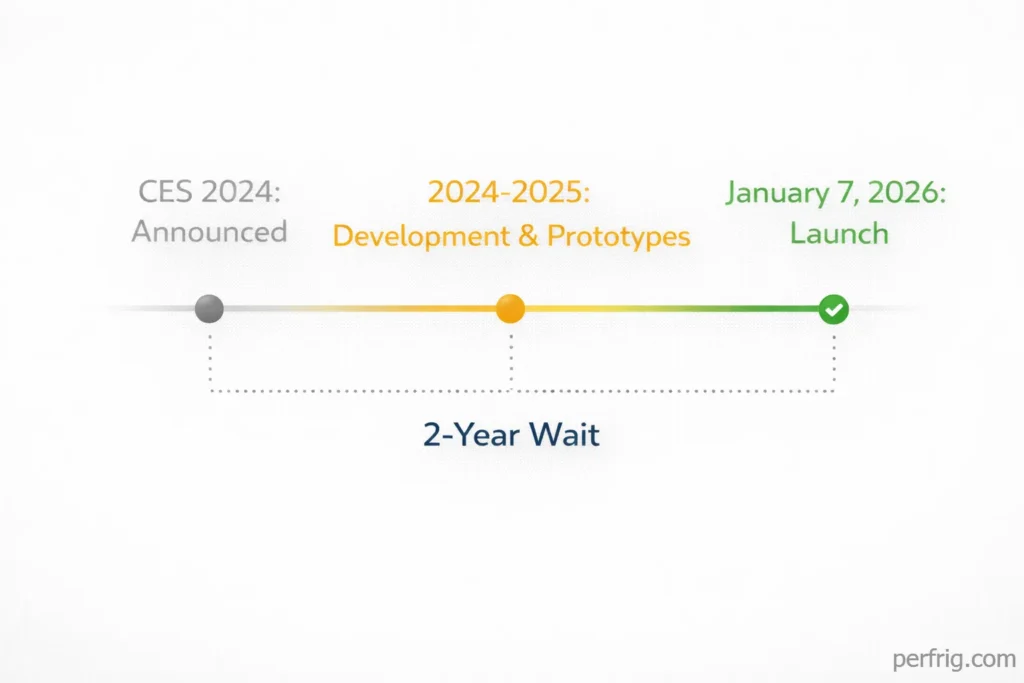
NVIDIA launched G-Sync Pulsar monitors on January 7, 2026, ending a two-year wait since the technology’s CES 2024 announcement. Four monitors from Acer, AOC, ASUS, and MSI arrived with pricing starting at $599, promising over 1,000Hz perceived motion clarity through variable frequency backlight strobing. For competitive gamers tracking targets in CS2, Valorant, or Overwatch 2, Pulsar eliminates the traditional tradeoff between smooth VRR and motion clarity.
What is G-Sync Pulsar
G-Sync Pulsar combines variable refresh rate with synchronized backlight strobing to eliminate motion blur. Traditional monitors keep backlights continuously illuminated, creating “motion hold” blur where pixels remain visible during entire frame times. Pulsar solves this by pulsing backlights in horizontal zones for approximately 25% of frame time, letting pixels settle before becoming visible.
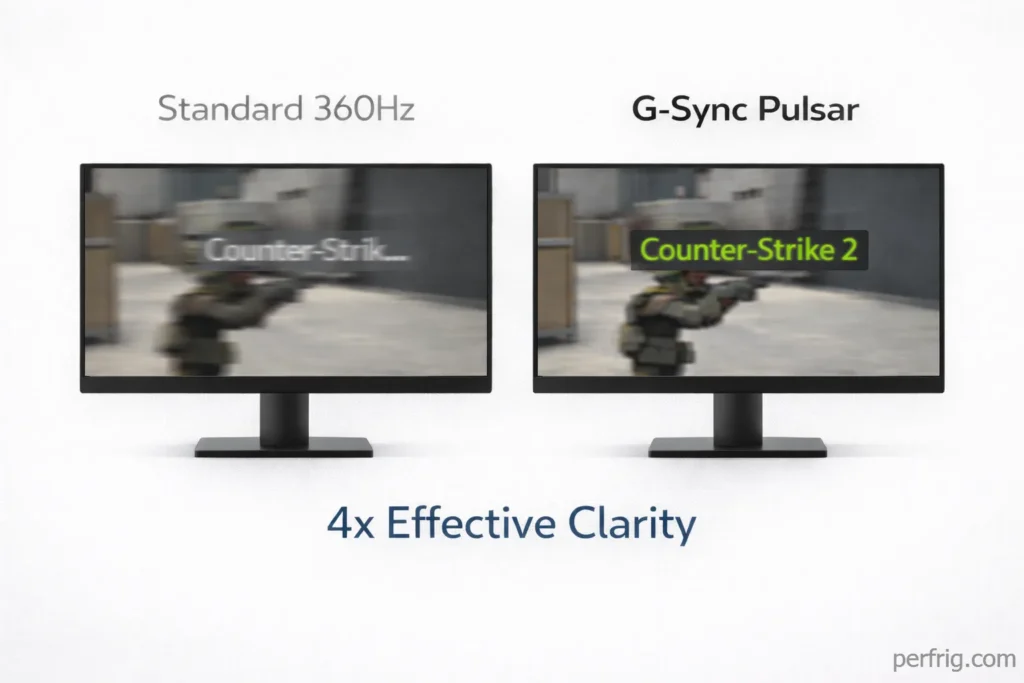
The innovation lies in variable frequency operation. Unlike NVIDIA’s previous ULMB technologies that worked only at fixed refresh rates, Pulsar synchronizes strobing with any framerate, maintaining tear-free VRR while adding motion clarity. NVIDIA claims over 1,000Hz effective motion clarity—four times better than standard 360Hz displays.
How the technology works
Pulsar requires specific hardware. Monitors need fast-responding IPS backlights capable of rapid pulsing without artifacts, with NVIDIA approving panels individually. The technology uses MediaTek scaler chips rather than dedicated G-Sync modules, making production more accessible while maintaining synchronization accuracy.
OLED displays remain incompatible. OLED panels illuminate pixels individually rather than using backlights, preventing the zonal strobing approach Pulsar depends on. Competitive gamers seeking maximum motion clarity currently need IPS panels despite OLED’s superior contrast.
The 25% duty cycle creates the clarity improvement. By reducing pixel visibility time, Pulsar minimizes motion hold blur. Players see sharp edges and readable text rather than smeared trails during fast movement.
Available monitors and specifications
Four G-Sync Pulsar monitors launched on January 7, all sharing similar specifications. The Acer Predator XB273U F5, AOC AGON PRO AG276QSG2, ASUS ROG Strix XG27AQNGV, and MSI MPG 272QRF X36 each feature 27-inch IPS panels running 2560×1440 resolution at 360Hz native refresh rates.
HDR support varies slightly between models. The Acer Predator reaches 550 nits peak brightness, while AOC, ASUS, and MSI models peak at 500 nits. All four include NVIDIA’s Ambient Adaptive Technology, automatically adjusting color temperature and brightness based on room lighting conditions. In bright rooms, monitors ramp brightness to 100% with cool white tones, while dimmer environments trigger reduced brightness and warmer colors.
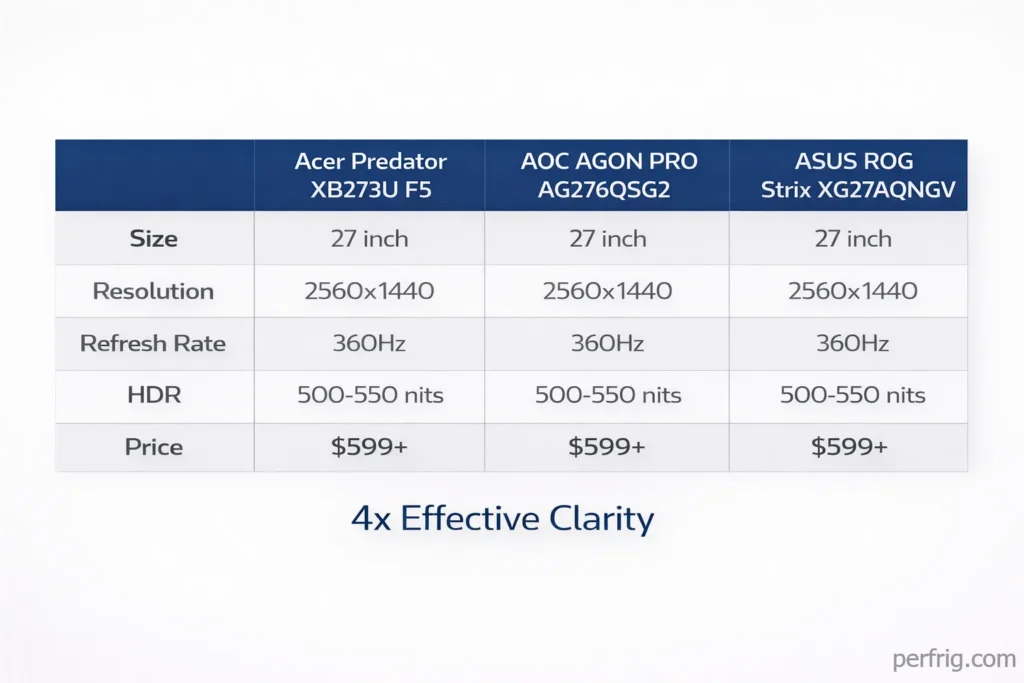
Pricing starts at $599 according to NVIDIA, with the AOC model likely hitting that entry point. Exact pricing for other models remains unconfirmed, but expect similar ranges given identical core specifications. All four monitors are available now through normal retail channels rather than limited launches.
The monitors use MediaTek scalers instead of dedicated G-Sync modules. This design choice reduces manufacturing costs while maintaining Pulsar’s synchronization requirements. Traditional G-Sync Ultimate monitors commanded premium pricing partially due to proprietary modules, so MediaTek integration helps position Pulsar technology at more competitive price points despite the advanced feature set.
Why this matters for competitive gaming
Motion clarity directly impacts competitive performance. In fast-paced shooters, players track opponents while maintaining crosshair accuracy. Traditional displays blur moving targets, forcing position prediction rather than seeing exact locations. Pulsar’s clarity lets players react to actual visual information.
CES 2026 demonstrations showed character nametags remaining legible at high speeds on Pulsar displays while appearing unreadable on traditional screens. This clarity extends to character models, environmental details, and projectile tracking—critical for competitive play in CS2, Valorant, and similar titles.
The technology doesn’t increase framerates. Instead, it maximizes clarity of frames already rendered, providing benefits across the entire framerate spectrum rather than only at specific refresh rates.
The two-year development journey
NVIDIA first showcased Pulsar at CES 2024, but the technology remained unavailable throughout 2024 as manufacturers developed products. Monitor companies revealed prototypes—MSI in January 2025, Acer in September 2024, ASUS in August 2024—but none reached retail until now.
The extended timeline likely reflects technical challenges. Variable frequency backlight strobing requires precise synchronization between GPU output, scaler processing, and backlight control. MediaTek needed to develop compatible scalers managing refresh rates, pixel response, and backlight timing simultaneously without introducing latency or artifacts.
Launching with four simultaneous options from major manufacturers suggests NVIDIA prioritized broad availability over rushing limited releases, providing choices across brands at similar price points.
Limitations and considerations
The $599 starting price raises questions for 27-inch 1440p monitors. Traditional 360Hz displays sell for $400-500, meaning buyers pay $100-200 premiums for motion clarity. Whether that investment makes sense depends on gaming priorities.
IPS limitations remain relevant. Pulsar improves IPS motion clarity dramatically, but underlying pixel response times still lag OLED. For non-competitive gaming where contrast matters more than absolute motion clarity, OLED might provide better overall experiences.
Monitor selection currently focuses on 27-inch 1440p 360Hz panels. Gamers wanting 4K, ultrawide formats, or different sizes need to wait for expanded product lines targeting enthusiast and productivity users.
What gamers should know
Competitive players benefit most. If you play esports titles competitively and run systems maintaining 200+ fps, Pulsar delivers genuinely useful improvements in target tracking scenarios. Pairing Pulsar monitors with properly optimized GPU settings maximizes competitive advantages beyond motion clarity alone. Casual gamers playing story-driven titles at 60-100fps might not notice dramatic differences—spending $600 on motion clarity you won’t fully utilize wastes money.
Budget constraints matter significantly. At $599-700 pricing, Pulsar monitors cost more than excellent alternatives offering most of the performance for less. Future purchases should consider waiting six months for broader size and resolution options better matching specific use cases.
Industry implications and timeline
Pulsar’s launch signals NVIDIA’s continued display technology commitment despite growing AI focus. While CES 2026 featured no new gaming GPUs, Pulsar demonstrates gaming remains strategically important. NVIDIA’s CES 2026 focus included both Pulsar monitors and DLSS 4.5 improvements, showing continued gaming technology development alongside growing AI initiatives.
Samsung revealed 1,040Hz displays at CES 2026, but Pulsar takes a different approach—improving motion clarity without requiring excessive framerates. The 1,000Hz effective clarity claim suggests Pulsar-enabled 360Hz monitors effectively match raw 1,000Hz displays in perceived motion quality.
Monitors became available January 7, 2026, with additional manufacturers likely announcing Pulsar-compatible models throughout early 2026. The coordinated launch across four major brands suggests broad industry support, increasing availabilty regardless of brand preferences.