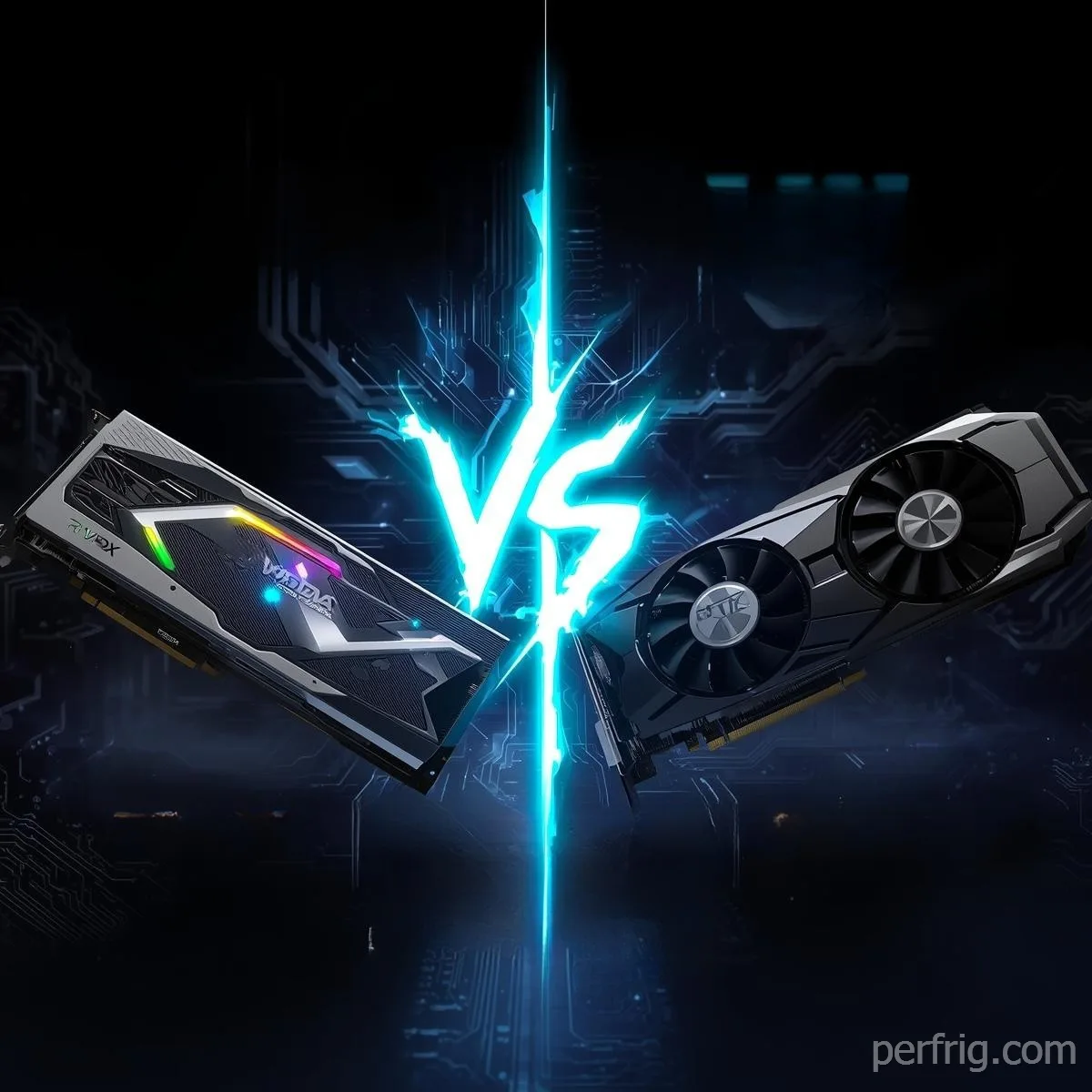


Picking between the RTX 4070 and 4070 Ti is trickier than it looks on the surface. Sure one is objectively faster but here’s the real question, does that performance boost actually justify the price gap for what you’re doing with your PC.
Both cards live in this interesting middle ground where they absolutely crush 1440p gaming and can even handle 4K pretty well in most titles. The pricing situation has shifted quite a bit since these launched though and that changes everything when you’re trying to figure out which one makes sense.
We’re going to break down what actually matters for gaming performance here. Real benchmarks across different resolutions, the specs that genuinely impact your experience and hopefully by the end you’ll know which card fits your setup and what you’re willing to spend.
The specs breakdown
Let’s start with the technical stuff because it matters even if it’s not the whole story.
| Specification | RTX 4070 | RTX 4070 Ti |
|---|---|---|
| CUDA cores | 5,888 | 7,680 |
| Boost clock | 2,475 MHz | 2,610 MHz |
| Memory | 12GB GDDR6X | 12GB GDDR6X |
| Memory bus | 192-bit | 192-bit |
| TDP | 200W | 285W |
| MSRP at launch | $599 | $799 |
| Current street price | $549-599 | $749-849 |
The Ti has about 30% more CUDA cores and runs slightly higher clocks. Both have 12GB VRAM though which is plenty for gaming at any resolution right now, even 4K with high textures isn’t going to max that out.
Power consumption is where things get interesting, that 85 watt difference might not sound like a huge deal but it means the Ti runs hotter and you need better cooling solutions.
How they perform in actual games
This is what really matters right, not spec sheets but actual framerates in the games you play.
At 1080p
Honestly both cards are kind of overkill for 1080p in most scenarios. You’ll hit CPU limits in plenty of games before the GPU becomes your bottleneck which is kind of a waste of the hardware.
In competitive titles like Valorant, CS2 and Fortnite both cards easily push past 144 FPS, we’re talking 200+ in many cases. For demanding single player stuff the Ti pulls ahead by maybe 12-15% but you’re still well over 100 FPS on the regular 4070.
Unless you’re running some crazy 360Hz monitor at 1080p the standard 4070 handles this resolution without even trying. The Ti’s extra muscle is mostly wasted here.
1440p is where it gets good
This resolution is the sweet spot for both cards and where the performance gaps become actually noticeable in gameplay.

Cyberpunk 2077 with everything cranked up (no ray tracing): RTX 4070 sits around 78 FPS RTX 4070 Ti pushes to about 92 FPS That’s roughly 18% faster
Hogwarts Legacy on high settings: 4070 manages 84 FPS Ti hits 97 FPS About 15% improvement
Call of Duty MW3 (high settings): 4070 gets you 142 FPS Ti reaches 165 FPS 16% better performance
Starfield with high preset: 4070 averages 71 FPS Ti climbs to 83 FPS Around 17% faster
You’re seeing a pretty consistent pattern here, somewhere between 15-18% better performance with the Ti in demanding games at 1440p. That’s the gap between smooth 80 FPS and really buttery 95 FPS in heavy titles.
Competitive shooters though, both cards absolutely demolish 1440p without breaking a sweat. We’re talking 200+ FPS in most esports games even with settings turned up.
4K gaming reality check
At 4K the performance difference gets a bit wider because the GPU is really working hard now.
The Ti typically performs about 18-22% better at this resolution but let’s be real here, neither card is truly comfortable doing 4K ultra settings in the most demanding current games. You’re hovering in that 50-65 FPS range for stuff like Cyberpunk or Starfield maxed out.
Enable DLSS quality mode though and both become legitimate 4K options. The 4070 can hit 60+ FPS in most games with DLSS doing its thing and the Ti pushes closer to 75-80 FPS which feels significantly smoother.
If 4K is your main goal you should probably be looking at a 4070 Ti Super or even stretching to a 4080. But if you’re cool with using DLSS and maybe tweaking a few settings the Ti handles 4K respectably enough.
Ray tracing performance
Both cards have the same ratio of RT cores to CUDA cores so ray tracing performance scales pretty much in line with regular rasterization. The Ti is roughly 15-18% faster in ray traced workloads just like everything else.
Cyberpunk with ray tracing ultra at 1440p: 4070 manages around 45 FPS Ti gets you about 53 FPS
With DLSS quality those numbers jump to roughly 75 and 88 FPS. DLSS 3 frame generation pushes even higher but adds some input lag that competitive players will definitely notice and probably hate.
The takeaway is both cards benefit from DLSS equally. If a game supports it you’re getting massive performance gains regardless of which card you bought.
Power draw and heat
This is where the cards diverge more than you might expect and it actually matters for your overall build.
The 4070 at 200W TDP runs cool and quiet in pretty much every scenario. Lots of partner cards can get away with just dual-fan cooling and still stay under 70°C during gaming sessions. It’s genuinely impressive how efficient this thing is.
The Ti at 285W needs more serious cooling though. You want a quality triple-fan model to keep temps reasonable and most cards will still hit 75-80°C under heavy load. Not dangerous or anything but noticeably warmer and the fans spin faster which means more noise.
Real power consumption during gaming: 4070 typically draws 180-195W Ti pulls 260-280W

If you’re running a 650W power supply the 4070 leaves you more headroom for everything else. The Ti really wants a 750W PSU especially if you pair it with something power hungry like an i9 or Ryzen 9.
Over a year of heavy gaming that 80-100W difference might add $15-20 to your electric bill depending on your local rates. Not massive but worth factoring in if you game a lot.
Value equation
Here’s where it gets messy because pricing fluctuates and varies by region.
At MSRP the gap was $200 for roughly 15-18% more performance which honestly isn’t great value, you’re paying more per frame with the Ti. But current street prices tell a different story.
The 4070 often shows up around $549 while the Ti hovers between $749-799. That $200-250 gap for 15-18% better performance puts them in somewhat similar value territory actually.
Rough cost per frame: 4070 at $549 is about $7 per FPS at 1440p Ti at $749 works out to around $8 per FPS

Neither is an amazing deal compared to previous generations but the 4070 edges ahead in pure value terms.
Who should grab the regular 4070
The standard 4070 makes sense if:
You’re mainly gaming at 1440p and it handles this beautifully, you won’t feel like you’re missing out on anything.
Building something smaller or quieter because the lower power means less heat and you can use smaller coolers without issues.
Budget matters and that $150-200 saved goes toward a better CPU or more RAM or a nicer monitor.
You’ve got a lower wattage PSU like a good 650W unit and don’t want to upgrade that too.
The 4070 is honestly the smarter pick for most people. It hits the performance sweet spot without the extra cost and power requirements.
When the Ti makes more sense
Go for the Ti if:
You want maximum 1440p performance because that extra 15-18% means staying above 60 FPS in more demanding titles with everything maxed.
4K gaming matters to you since with DLSS the Ti is noticeably more comfortable at 4K than the standard card.
You’re keeping this card long term like 3+ years and that extra performance headroom might matter more as games get heavier.
The price gap doesn’t really impact your build and you just want the better performer.
The Ti is basically the 4070 with some breathing room for future games and higher resolutions.
Other options to consider
Before commiting to either card here are some alternatives in the same ballpark price wise:
AMD RX 7800 XT usually around $499-549, performs similar to the 4070 but no DLSS. Great value if ray tracing isn’t a priority.
RTX 4070 Super typically $599-649, sits right between the regular 4070 and Ti performance wise. Better value than the Ti if you find it at a decent price.
Used RTX 3090 sometimes available around $600-700 used, more VRAM (24GB) but higher power draw and no DLSS 3 frame generation.
Wait for next gen if you’re not in a rush since RTX 50 series is probably 6-8 months out. Current card prices will drop when that happens.
So which one actually
Here’s the straightforward answer to which you should buy.
Get the 4070 if you’re gaming at 1440p, want efficiency and care about getting good value. It’s the smarter choice for most builds.
Get the Ti if you need extra performance for 4K, plan to keep the card several years or want the absolute highest 1440p framerates possible.
The performance gap is real but not dramatic when you think about it. 15-18% faster translates to the difference between 80 FPS and 93 FPS in many scenarios. Both are smooth, both feel good.
If the price difference is $150 or less and budget isn’t tight, go Ti. If it’s $200+ the regular 4070 delivers better value unless you specifically need that performance.
Neither is a bad choice really. The 4070 represents one of the better value options in NVIDIA’s current stack while the Ti offers excellent performance for high refresh 1440p and capable 4K.
Just remember to factor total cost, the Ti might require a beefier PSU and better case airflow which adds to the investment beyond just the GPU price tag.
Wrapping up
The 4070 versus 4070 Ti decision comes down to your specific situation more than one being objectively superior.
Most gamers will be totally satisfied with the standard 4070. It handles any current game at 1440p, runs efficient and cool and costs less. That’s a solid combination right there.
The Ti makes sense for enthusiasts who want maximum performance and aren’t as worried about the price premium. If you’re building a no-compromises rig the Ti is worth the extra investment.
Whatever you pick both cards are solid options in today’s GPU market. They’re not the incredible value some previous generations offered but they deliver strong performance with features like DLSS 3 that genuinely make a difference in demanding games.
Check current prices before buying because GPU pricing changes weekly. A $50 drop on the Ti or a sale on the 4070 can completely shift the value calculation.