
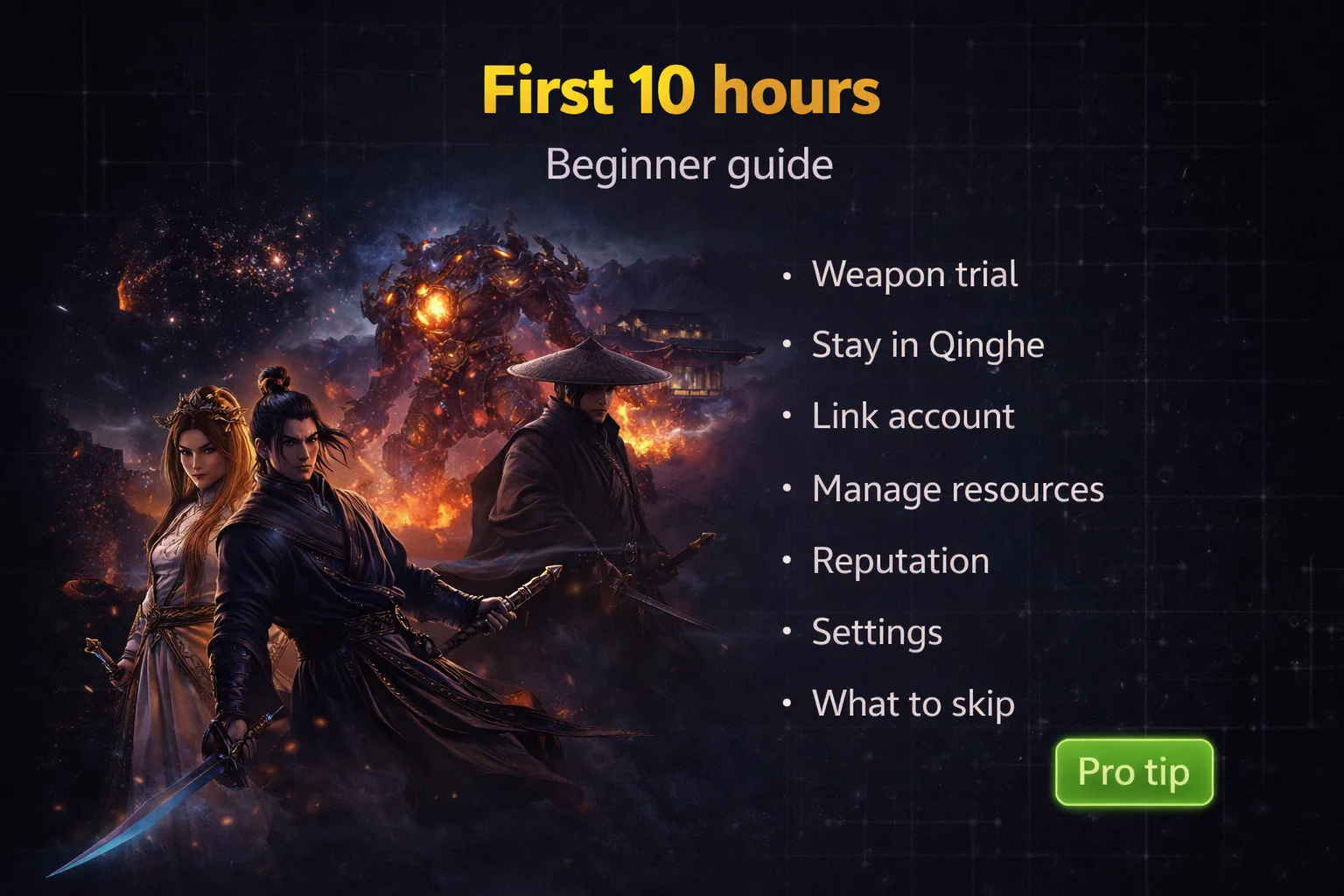
If you are just starting out, here is what matters most: Where Winds Meet does not hold your hand after the tutorial ends. It drops you into Qinghe with a weapon, a vague sense of direction, and the assumption that you will figure the rest out. Most new players spend their first few hours making decisions they quietly regret later because the game never flags them as important. This Where Winds Meet beginner guide covers the things you need to know before you invest real time into your character and your world.
[DOWNLOAD FREE AND START PLAYING]
Do not rush past the weapon trial
The very first thing the game asks you to do after the opening cutscenes is test weapons. This feels like a formality. It is not. The weapon trial is the only opportunity you get to try all eight types before committing to a starting choice, and the game does not offer a clean reset once you are past it.
Spend at least two minutes with each weapon. What you are looking for is not which one looks coolest but which dodge behavior feels instinctive to you. The sword slides diagonally. The spear has a heavy horizontal push. The rope dart is a completely different rhythm from everything else. The fan and umbrella feel unusual at first but become extremely fluid once you are used to them.
If you are genuinely unsure after testing, start with the sword. It is the most readable and teaches you the parry timing the fastest. You can unlock other weapons later, but your starting weapon shapes the first ten hours more than anything else.
Stay in Qinghe until it is done
Most players see Kaifeng mentioned early and want to get there. Resist this completely. Qinghe is the introductory region, and it is designed to teach you the game’s systems at a manageable pace. Kaifeng is the second major region, it is three times as dense, and it assumes you already understand how reputation, professions, and side quest structures work.
Players who rush to Kaifeng before finishing Qinghe consistently report the same experience: everything feels overwhelming, enemies are noticeably harder, the economy does not make sense, and the NPCs seem to expect context you do not have yet. The game never tells you this outright.
Finishing Qinghe completely takes around eight to twelve hours depending on how thoroughly you explore. That time is worth spending. The story context, the reputation you build, and the skill progression you accumulate all transfer and give Kaifeng a completely different feel when you arrive prepared.
Link your account before your first session
The game does not prompt you to do this at startup, which is why a lot of new players miss it. If you plan to play on multiple platforms or even if you just want your progress secured, link your account on the official Where Winds Meet website before you create your character.
Account linking is platform-specific for certain purchases, and if you create a character on Steam first and then try to link later, the process has more steps than it should. Two minutes at the start saves a frustrating conversation with support later.
How to manage your first few hours of resources
The early game gives you currency and materials faster than you expect, and most new players spend them wrong. Here is a simple way to think about it: in the first three hours, do not spend anything on cosmetics or convenience items. Every resource in that window should go toward weapon upgrades and one Qigong technique upgrade.
The specific Qigong technique to upgrade first is Cloud Step. Once you upgrade it to the first tier, the repositioning distance increases meaningfully and it stops feeling clunky. Before that upgrade it is genuinely awkward, which leads a lot of beginners to ignore it entirely, which then makes combat harder than it needs to be in the mid-game.
After those two investments, your third priority is the storage expansion. Where Winds Meet has an inventory limit that feels generous for the first two hours and then becomes genuinely constraining once you start picking up profession materials, quest items, and loot simultaneously. Expanding storage early removes a friction point that otherwise slows everything down.
What the reputation system actually means for you early on
The reputation system is introduced during the Qinghe storyline but the game undersells how much it matters from the start. Your reputation in each region is not just a number. It controls which NPC conversations unlock, which side quests appear, and whether certain vendors talk to you at all.
The practical implication for new players: do not steal, do not attack NPCs unless a quest requires it, and do not skip the small favor quests that feel inconsequential. Those favor quests are the fastes way to build reputation in Qinghe, they take five to ten minutes each, and they open vendor discounts and questlines that matter later. Players who ignore them spend money on items they could have gotten cheaper or free.
Negative reputation is recoverable but slow. If you are playing the kind of character who causes trouble, do it intentionally and understand you will pay a cost. If you are playing a straightforward hero path, treat every NPC interaction as a reputation opportunity.
The settings to change before you play seriously
Two settings that the game hides in menus and that significaly affect your experience. First, turn off motion blur. Where Winds Meet has fast combat and motion blur makes enemy attack tells harder to read. It looks cinematic in screenshots and actively hurts gameplay during fights.
Second, set your camera sensitivity manually rather than accepting the default. The default is tuned for controller and feels sluggish on mouse. Increasing horizontal sensitivity to around 60 and vertical to around 50 is the starting point most players settle on, though it varies by preference.
If your PC is running the game at inconsistent frame rates, our best PC settings guide covers exactly which graphics options to adjust for stable performance without major visual loss.
[TRY WHERE WINDS MEET FREE NOW]
A few things not to worry about early on
Guild wars, PvP duels, and the endgame raid content are not relevant for your first ten hours and you should not be thinking about them yet. The game surfaces these systems early through the UI but they are designed for players with established characters and regional reputation.
The same applies to the secondary profession system. It is worth engaging with eventually, and our gameplay guide covers it in detail, but in the first ten hours you will get more value from focusing on the main questline and your combat progression. Everything else opens naturally as you play.
[DOWNLOAD WHERE WINDS MEET FREE AND PLAY TODAY]










Join the Discussion