
Where Winds Meet throws a lot at you early on. Eight weapon types, Qigong techniques, a reputation system, professions, co-op guilds, faction choices. The game does not explain most of this very well, and a lot of new players spend their first few hours clicking through tutorials without really understanding what any of it means. This Where Winds Meet gameplay guide breaks down the systems that actually matter so you can start making real decisions from the beginning.
[TRY IT FREE ON STEAM]
How the combat system actually works
The first thing to understand is that Where Winds Meet combat is not just about button mashing. It is built around timing, positioning, and the relationship between your weapon choice and the enemy in front of you.
Every weapon type in the game has three core elements: a basic attack chain, a set of unlockable skills, and a weapon-specific dodge behavior. The sword has fast diagonal slides built into its dodge. The spear pushes enemies back on a heavy strike. The rope dart lets you pull distant enemies toward you or launch yourself at them. These are not just cosmetic differences. They change how you fight completely. If you want our overall take on the game before going deep on systems, our full review covers that.
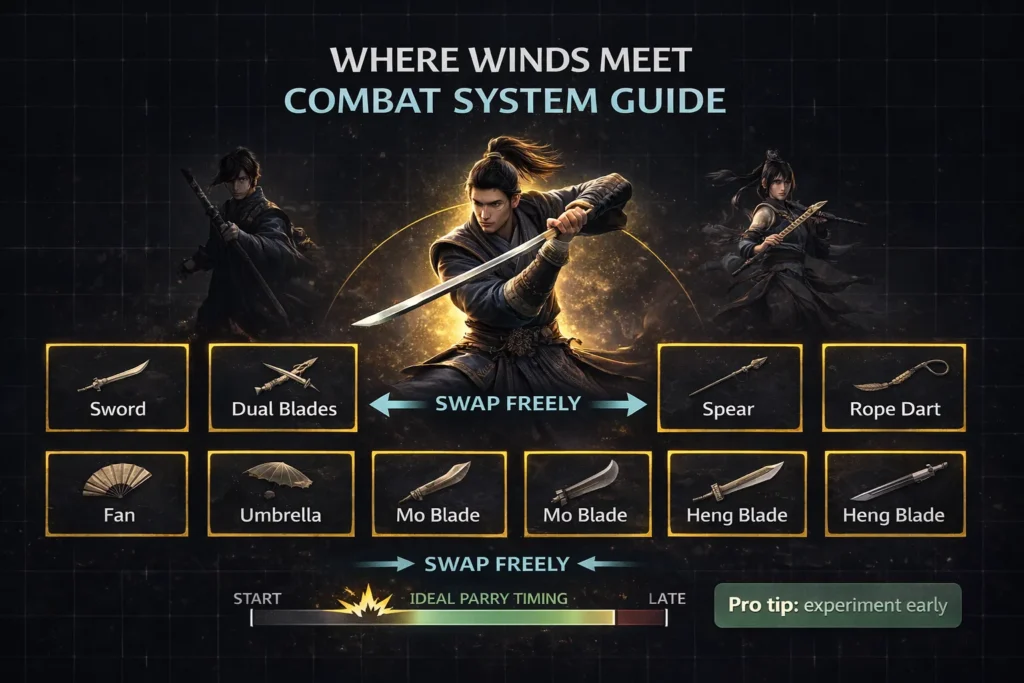
Most new players pick up a sword and stick with it because it feels safe. That is fine early on, but the game rewards players who experiment. You are not locked into one weapon. Swapping between two equipped weapons mid-fight is fluid and intentional by design, and combining two weapons with complementary skills is how the more interesting combat expressions emerge.
Parrying is worth learning early, even if it feels difficult at first. A successful parry staggers most standard enemies and opens them up for a follow-up. The timing window is visible once you know what to look for: a faint flash on the enemy just before they connect. It becomes reliable with practice, and it makes a significant difference in how manageable the harder encounters feel.
Qigong techniques and how to use them
Qigong techniques are the abilities that sit alongside your weapon skills. Cloud Step lets you reposition instantly during a fight. Chi Grip stops a moving enemy in place. Lion’s Roar creates a shockwave that pushes nearby enemies back. Magic Hand lets you interact with objects or enemies from a distance.
The game does not explain this very well at the start, but Qigong techniques have their own resource that regenerates during combat. The key is not to treat them as specials you save for big moments. They are meant to be used constantly, and especialy Cloud Step should become a reflex for getting out of dangerous positions rather than something you hold onto.
Each Qigong technique can be upgraded through the skill progression system. Early upgrades are cheap and meaningful. If you have been ignoring the upgrade menu, that is worth fixing quickly because the base versions of these abilities are noticeably weaker than their first upgrade tier.
The reputation and Jianghu system
Once you understand this system, everything in the open world makes more sense. Your reputation in Where Winds Meet is tracked separately across different regions and factions. It is not a single global morality meter. You can be a respected figure in Qinghe while being actively wanted by the authorities in Kaifeng.
Reputation affects who talks to you, which quests become available, and how NPCs react when you approach them. High reputation in a region unlocks vendor discounts, faction quests, and companion interactions that lower-reputation players simply do not see. It is worth being deliberate about it rather than letting it drift based on random decisions.
The Jianghu system is the social layer sitting on top of reputation. Other players in your world can see your Jianghu standing, and certain multiplayer activities like guild wars and faction events are gated behind reaching specific thresholds. For solo players, the Jianghu standing still matters because it affects which story branches open in later questlines.
Professions and why they are worth your time
Professions in Where Winds Meet are completely separate from combat progression. You can become a doctor, architect, merchant, or bodyguard without those choices affecting your fighting ability at all. The game presents them as optional, which they are, but they are also genuinely useful.
The doctor profession unlocks the ability to craft and sell remedies to other players and NPCs, which generates reliable income early in the game when money is tight. The merchant profession opens up trade routes between regions that pay out significantly better than basic looting. Neither profession requires you to abandon combat content. You can switch between them freely.
If you are going to pick one profession to start with, the bodyguard role is probably the most naturalistically integrated into the main questline. Several story quests involve escorting NPCs between locations, and having the bodyguard profession active during those quests adds additional dialogue and rewards that you would otherwise miss.
Co-op, guilds, and how multiplayer fits in
The multiplayer structure in Where Winds Meet is built so that you never have to engage with it if you do not want to. The full solo campaign is completable without joining a guild, entering a dungeon with other players, or participating in any PvP activity. That said, the co-op content is worth knowing about because it scales well.
Co-op exploration with up to four friends shares quest progress. If a friend is further along in the main story than you are, you can enter their world and participate in their questline to see content you have not reached yet, though story progress basicly only saves for the host. Guild wars and raids open up at later reputation thresholds and are the endgame multiplayer loop for players who want to go beyond the solo content.
[TRY WHERE WINDS MEET FREE NOW]
Getting started the right way
The single biggest mistake new players make is rushing through the tutorial and missing the weapon test at the beginning of the game. That test lets you try every available weapon type before committing. Take it seriously and spend a few minutes with each one, because your starting weapon choice shapes your first ten hours significantly.
After the tutorial, focus on the Qinghe region completely before moving to Kaifeng. Qinghe is designed to introduce the systems at a manageable pace. Kaifeng is dense and overwhelming, and it assumes you already understand the basics. Players who skip ahead tend to bounce off the game because everything hits at once.
Read our beginner guide for a detailed breakdown of the first few hours, and check our best PC settings guide to make sure the game runs smoothly before you invest serious time into it.
[DOWNLOAD WHERE WINDS MEET FREE AND START PLAYING]










Join the Discussion